
Great libraries · Washington, D.C.
Inside the Library of Congress, from Jefferson's shelves to the dome
The nation's library began with a few hundred books, burned in a war and was rebuilt around a former president's private shelves. Its Jefferson Building is one of the great rooms of the country.
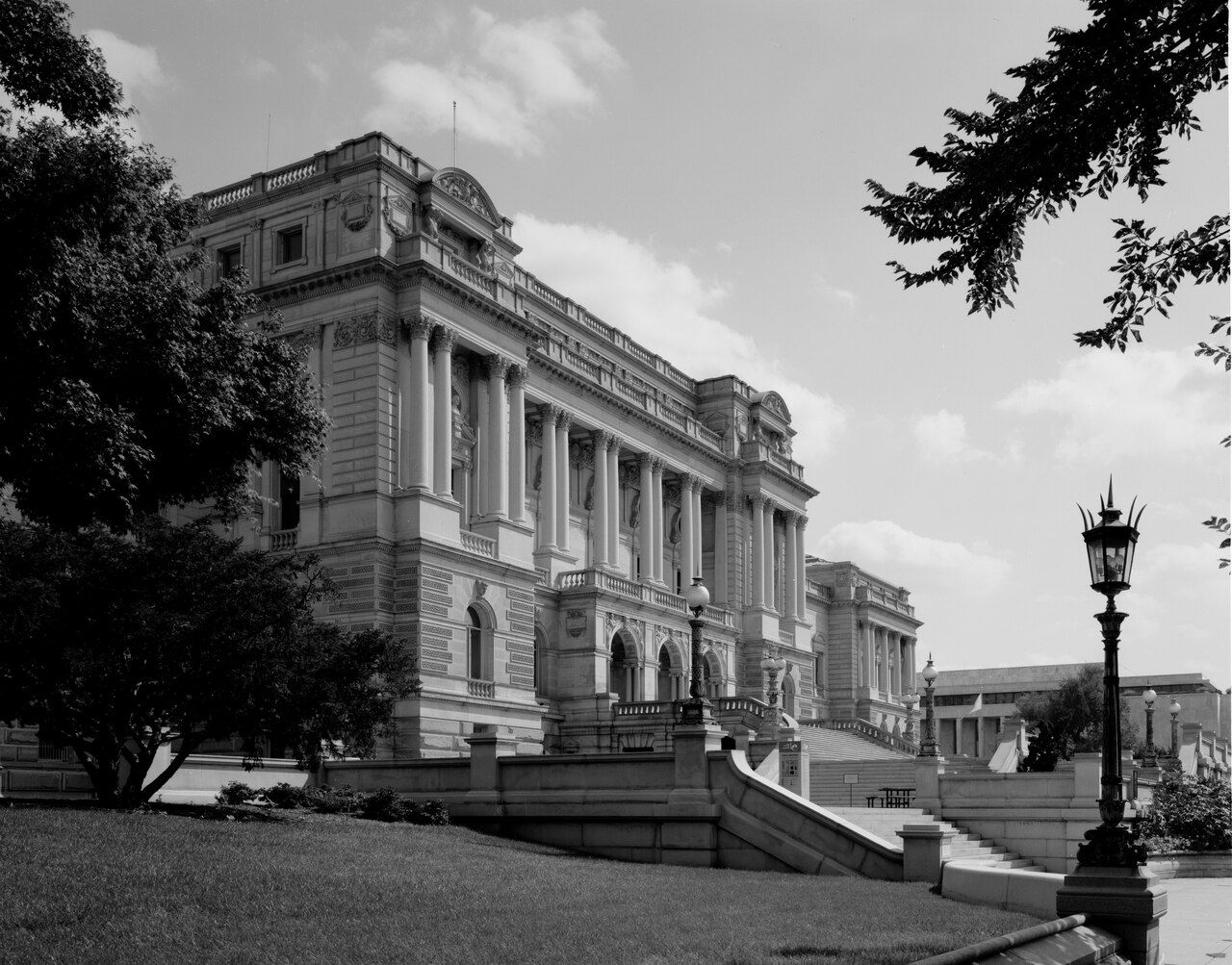
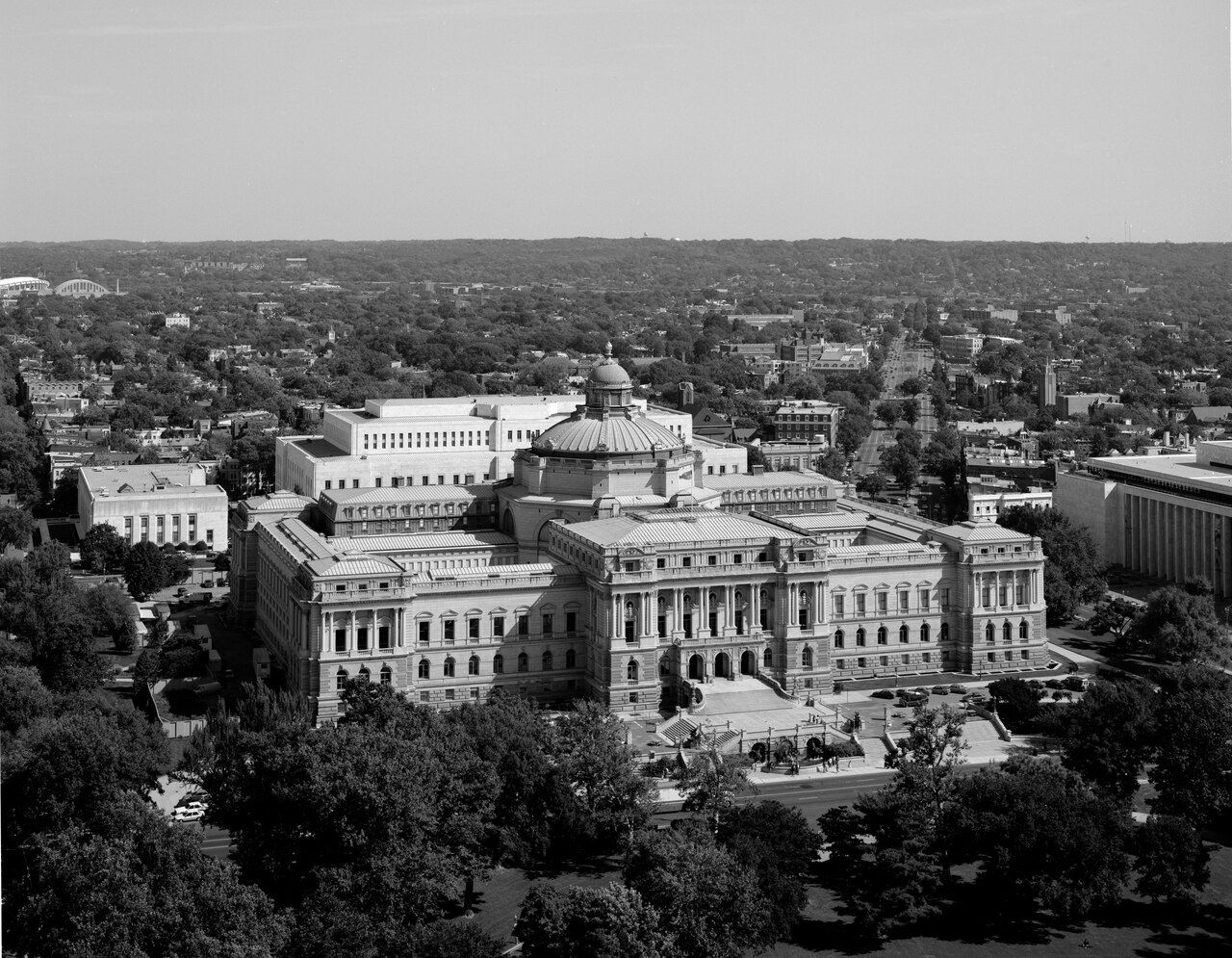
The Library of Congress stands on Capitol Hill in Washington, across First Street from the Capitol. It is the research library of Congress, the home of the national copyright office and one of the largest libraries in the world. For a traveller it is also three buildings, of which one, the Thomas Jefferson Building, is a public monument as much as a library: a palace of marble, mosaic and painted ceilings built to show that a young republic took learning seriously.
You do not need to be a researcher to go in. The Great Hall and the exhibitions are open to visitors, and the Main Reading Room can be seen from a gallery above. If you want to use the collections yourself, you can apply for a reader card.
A library that burned and began again
Congress founded its library in 1800, when the government moved to Washington, and kept it in the Capitol. In August 1814, during the War of 1812, British troops set fire to the building and the books were lost.
Thomas Jefferson, by then retired at Monticello, offered his own library as a replacement. It was the finest private collection in the country, gathered over half a century, and it ranged far beyond law and politics into philosophy, science, the arts and literature. Congress bought it in 1815. Some members objected that it held too many books of no practical use, and Jefferson's reply, in effect, was that there was no subject a legislator might not need to consult. That idea shaped the library ever after.
A second fire, in 1851, destroyed about two-thirds of Jefferson's books. The library has spent a long time rebuilding the set, and an exhibition in the Jefferson Building now shows his collection reassembled on curving shelves, with the surviving originals marked apart from the replacement copies.
Look at how the shelves are arranged. Jefferson sorted his books by a scheme adapted from the philosopher Francis Bacon, dividing knowledge into memory, reason and imagination, or history, philosophy and the fine arts. The library used his system for many years after it acquired his books, and the exhibition follows his order, so you can see how one reader in the early republic mapped everything worth knowing.
The Jefferson Building and the Great Hall
By the late nineteenth century the books had outgrown the Capitol, and Congress approved a separate building. It opened in 1897 and was later named for Jefferson. Seen from the street, it is a grey granite palace with a green copper dome topped by a gilded flame, the Torch of Learning.
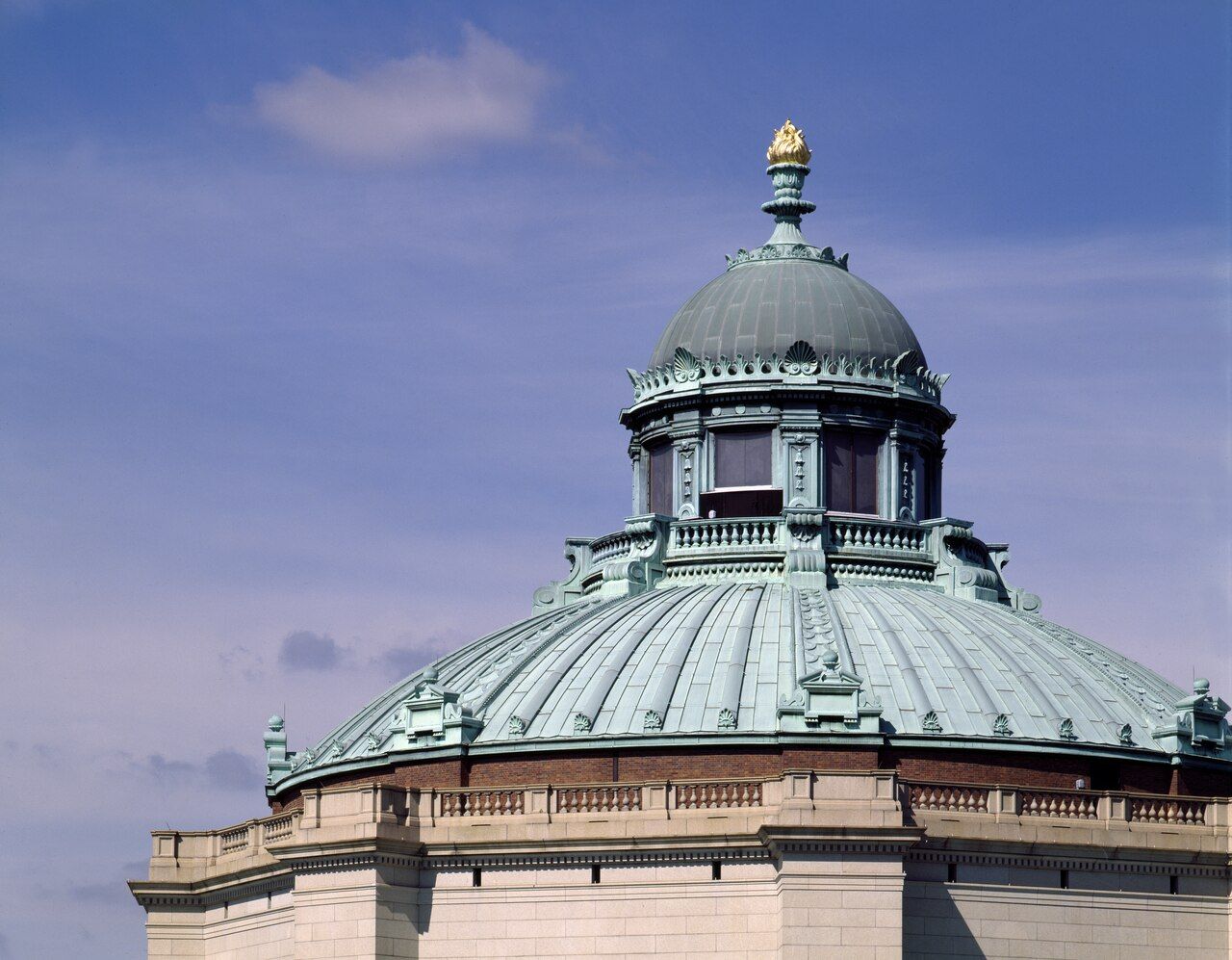
Walk inside and you enter the Great Hall, a two-storey space of white marble, carved staircases and arches, with painted and gilded ceilings and mosaics. Many American artists of the period worked on the decoration. Look up as you move through it, because some of the best work is overhead.
The exhibitions around the Great Hall change, but some treasures are usually on view. A Gutenberg Bible printed on vellum in the 1450s has long been displayed near the hall, along with a handwritten Bible from Mainz made around the same years. Seeing the printed and the handwritten book side by side is a short lesson in how reading changed.
Free guided tours of the Jefferson Building usually run through the day, led by volunteer docents who know the symbolism of the decoration in great detail. They are the best way to make sense of the murals and inscriptions, and they take less than an hour. Check the schedule when you arrive.
The Main Reading Room
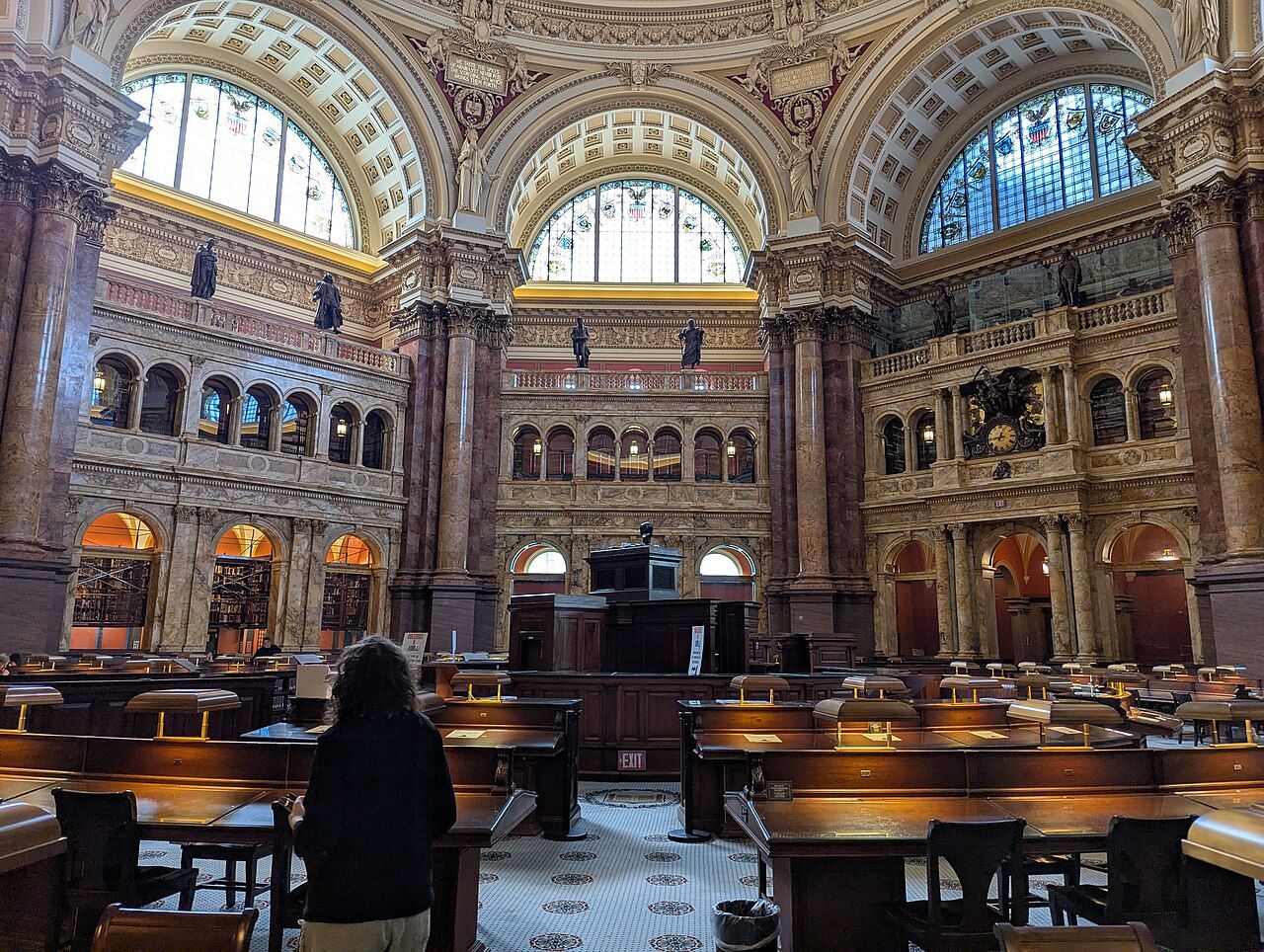
At the heart of the building, under the dome, is the Main Reading Room. It is an eight-sided hall with rows of curved desks arranged in rings around a central desk, where staff once handed out books. Massive columns of marble rise to the arches; between them, figures representing fields of knowledge stand above the columns, and bronze statues of thinkers and writers line the balustrade of the galleries.
Shelved nearby · LB 112Boston Public Library, a palace that is free to allVisitors see the room from an enclosed overlook on an upper floor. From up there you can watch researchers bent over their books far below, and the hush carries even through the glass. On certain open days each year, the reading room has been opened for the public to walk the floor; check whether one falls during your visit.
From up there you can watch researchers bent over their books far below, and the hush carries even through the glass.
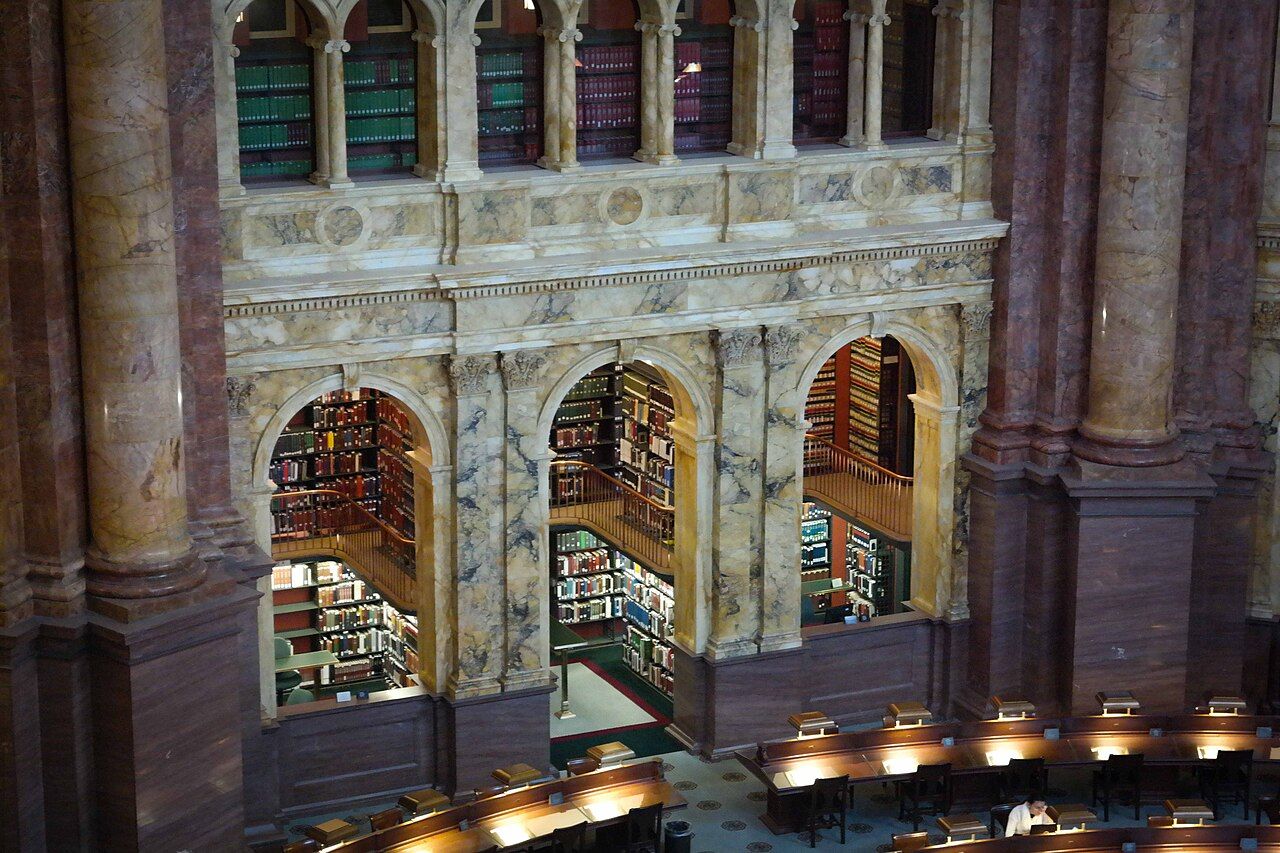
If you want to sit at one of those desks yourself, you need a reader card. It is free and requires photo identification, and you register in person in the library's Madison Building across Independence Avenue. You will be asked to explain in general terms what you want to read. Books do not leave the building; you request them and they are brought to your desk.
The library's other buildings have reading rooms of their own. In the John Adams Building, behind the Jefferson Building, the North Reading Room is decorated with murals of the pilgrims from Chaucer's Canterbury Tales, a quieter and less crowded space for readers with a card.
Writers, poets and the national library
The library has long had literary connections. The poet Archibald MacLeish served as Librarian of Congress from 1939 to 1944, and the library appoints a Poet Laureate, a post that grew out of the older role of Consultant in Poetry. Readings and talks take place through the year, and the library runs the National Book Festival, usually held in late summer or early autumn.
Its collections hold the papers of many American writers, as well as maps, music, photographs and recorded sound. The photographs of the Farm Security Administration, which documented rural poverty during the Depression, are among its best-known holdings and make a good companion to the novels of John Steinbeck.
Planning your visit
- Entry to the Jefferson Building is free. At busy times you may need a timed pass; check before you go.
- Allow time for security screening, and bring as little as you can.
- Capitol South is the nearest Metro station. A tunnel also links the library with the Capitol Visitor Center, though access rules change.
- Weekday mornings are usually quieter than weekends and holidays. Spring and autumn are the pleasant seasons to walk Capitol Hill.
Combine the visit with a walk past the Capitol and down the Mall, or plan a longer trip north to the other great reading rooms of the East: the public library on Fifth Avenue in New York and the Boston Public Library on Copley Square.
Pictures on loan from
- Carol M. Highsmith Public domain
- Carol M. Highsmith Public domain
- Sdkb CC BY-SA 4.0
- Smash the Iron Cage CC BY-SA 4.0
- Sdkb CC BY-SA 4.0
- Carol M. Highsmith Public domain