
The South · Key West
Key West's writers, at the end of US 1
Hemingway wrote in a studio above his carriage house here through the 1930s. Elizabeth Bishop and Tennessee Williams followed. The road that brings you ends at Mile Marker 0.
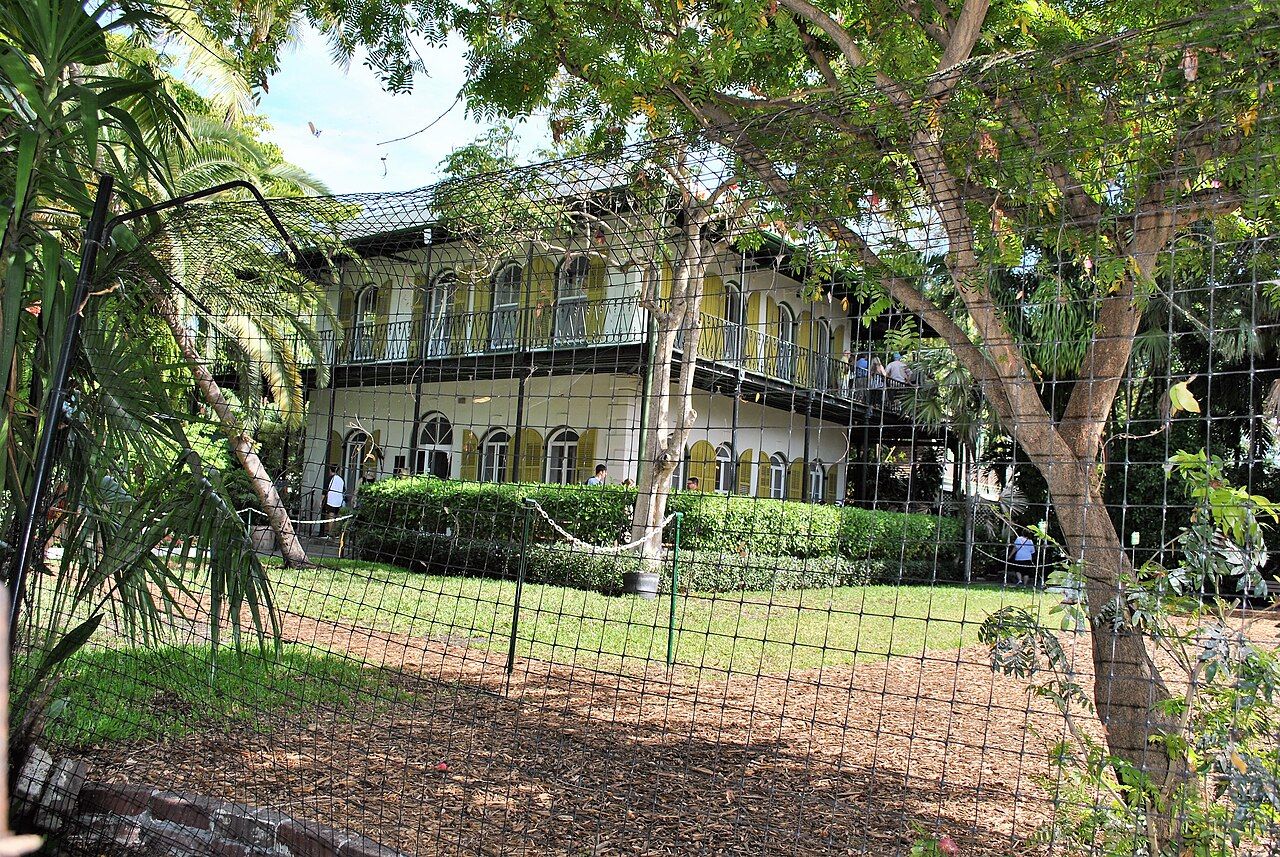
Key West is the last of the Florida Keys, an island closer to Havana than to Miami, and for a few decades in the middle of the twentieth century it was one of the most written-about small towns in America. Ernest Hemingway lived and wrote here through the 1930s. The poet Elizabeth Bishop followed, and then the playwright Tennessee Williams, who stayed on and off for more than thirty years. The town has changed a great deal since then, but the houses, the heat and the light are still here.
The road in
Most people still arrive the way Hemingway's friends did, by road. US 1 leaves the mainland south of Miami and runs as the Overseas Highway for more than a hundred miles over bridges and low islands. Much of the highway follows the bed of the old railroad to Key West, which a hurricane wrecked in 1935; the road opened on its route in 1938. The Seven Mile Bridge, with the old railroad bridge running beside it, is the high point of the drive.
US 1 ends in Key West at Mile Marker 0, at the corner of Whitehead and Fleming Streets. The same highway runs north for more than two thousand miles to Fort Kent, Maine, on the Canadian border, which makes this a good place to begin or end a long literary road trip.
Hemingway's house on Whitehead Street
Hemingway first came to Key West in 1928 with his second wife, Pauline Pfeiffer, and worked on A Farewell to Arms during that first stay. In 1931 they bought a stone house on Whitehead Street, built in 1851, with money from Pauline's uncle. It is a two-storey Spanish Colonial house with tall shuttered windows and wraparound iron balconies, set in a walled garden of palms.
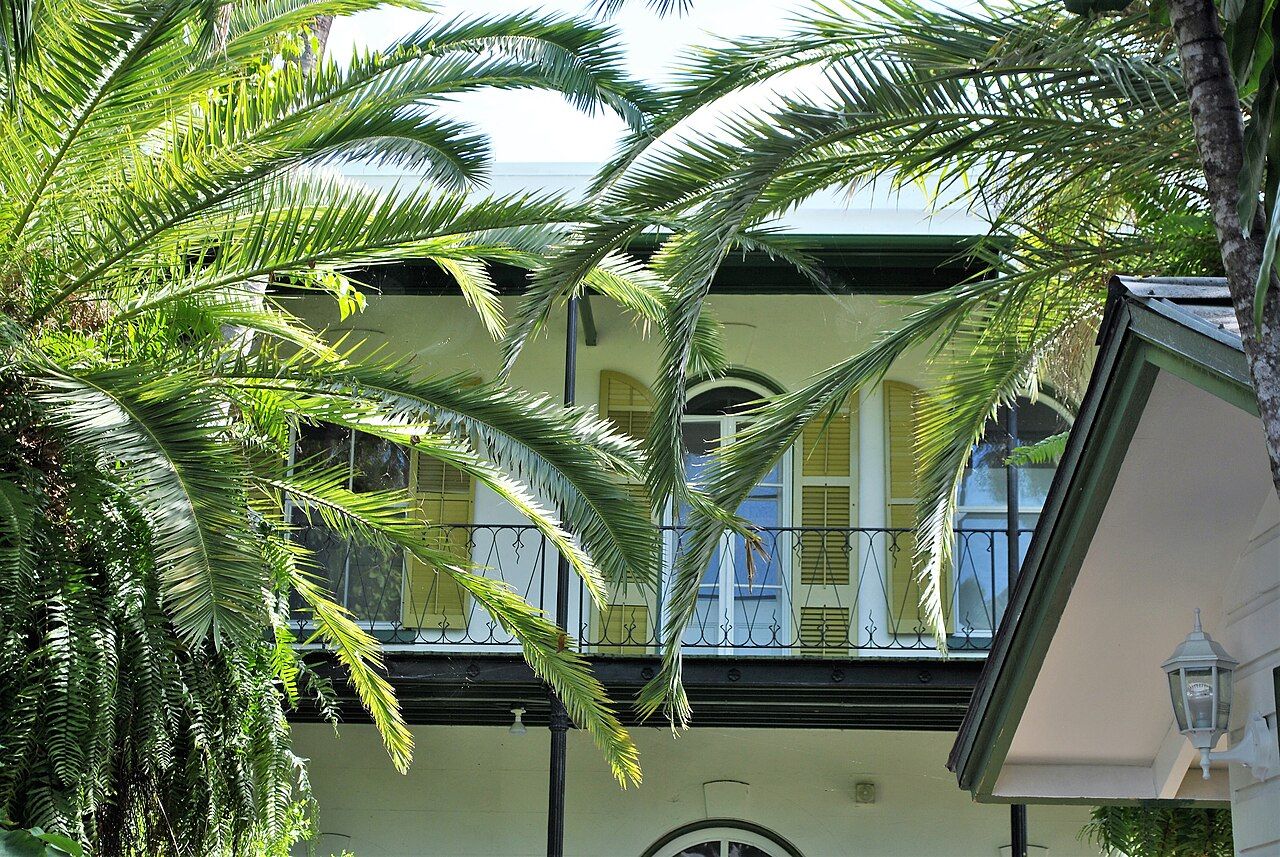
He wrote in a studio on the upper floor of the carriage house behind the main house, working in the mornings and fishing the Gulf Stream in the afternoons. The Key West years produced Death in the Afternoon, Green Hills of Africa, the stories The Snows of Kilimanjaro and The Short Happy Life of Francis Macomber, and To Have and Have Not, his only novel set in Key West, which follows a fishing-boat captain in hard times during the Depression. The pool in the garden, one of the first on the island, was built while he was away covering the war in Spain.
Shelved nearby · SO 035Faulkner's Oxford, MississippiThe marriage ended at the end of the decade, and Hemingway left for Cuba; Pauline stayed in the house until her death in 1951. The house is privately owned and run as a museum, and guided tours start often through the day. You can also wander the house and gardens on your own after a tour.
The six-toed cats
The house is home to a large colony of cats, many of them polydactyl, with six toes or more on their front paws. The house's story is that they descend from a six-toed cat given to Hemingway by a ship's captain; whatever the truth of that, the cats are well fed and cared for, they sleep on the furniture and in the garden, and they are named after film stars and writers. If you are allergic, take precautions. The cats are also a reminder that the house was a family home: Hemingway's two younger sons spent their childhood winters here.
Bishop, Williams and the others
Elizabeth Bishop lived in Key West from the late 1930s to the mid-1940s, in a small white house on White Street. Several of the poems in her first book, North and South, published in 1946, draw on Key West and the Florida coast: the water, the birds and the poor neighbourhoods of the island.
Tennessee Williams first came in the early 1940s and later bought a small cottage on Duncan Street, where he wrote and revised plays for more than three decades. Both houses are private; you can look from the street but not go in. Other writers wintered here too, among them Robert Frost and John Dos Passos, who first told Hemingway about the island. The Key West Literary Seminar, a non-profit, holds its writers' gathering in the winter, usually in January.
Around the old town
Across Whitehead Street from Hemingway's house, the old lighthouse is now a museum, and the climb to the top gives you a view over the rooftops and the house's garden. Walk west to Bahama Village, the historically Black neighbourhood settled by Bahamian families, which grew up next to the old town in the years of segregation. The Key West Cemetery, in the middle of the island, is worth a slow walk for its raised tombs and blunt epitaphs. The streets of the old town, with their wooden houses raised on piers against flood and heat, are best seen on foot or by bicycle early in the day.
Key West is a long way from anywhere, and it works best as the end of a southern road trip. Our notes on how to plan a longer drive help with the route north. To see where Hemingway started out, visit his birthplace near Chicago, and on the way up the Atlantic coast, stop in Flannery O'Connor's Savannah.
Pictures on loan from
- Elisa.rolle CC BY-SA 4.0
- Elisa.rolle CC BY-SA 4.0