
New England and New York · Concord, Massachusetts
Concord and Walden Pond: one town, five writers
Emerson, Thoreau, Hawthorne and the Alcotts lived within a few miles of each other. In Concord you can walk from their houses to their graves, and swim where Thoreau did.
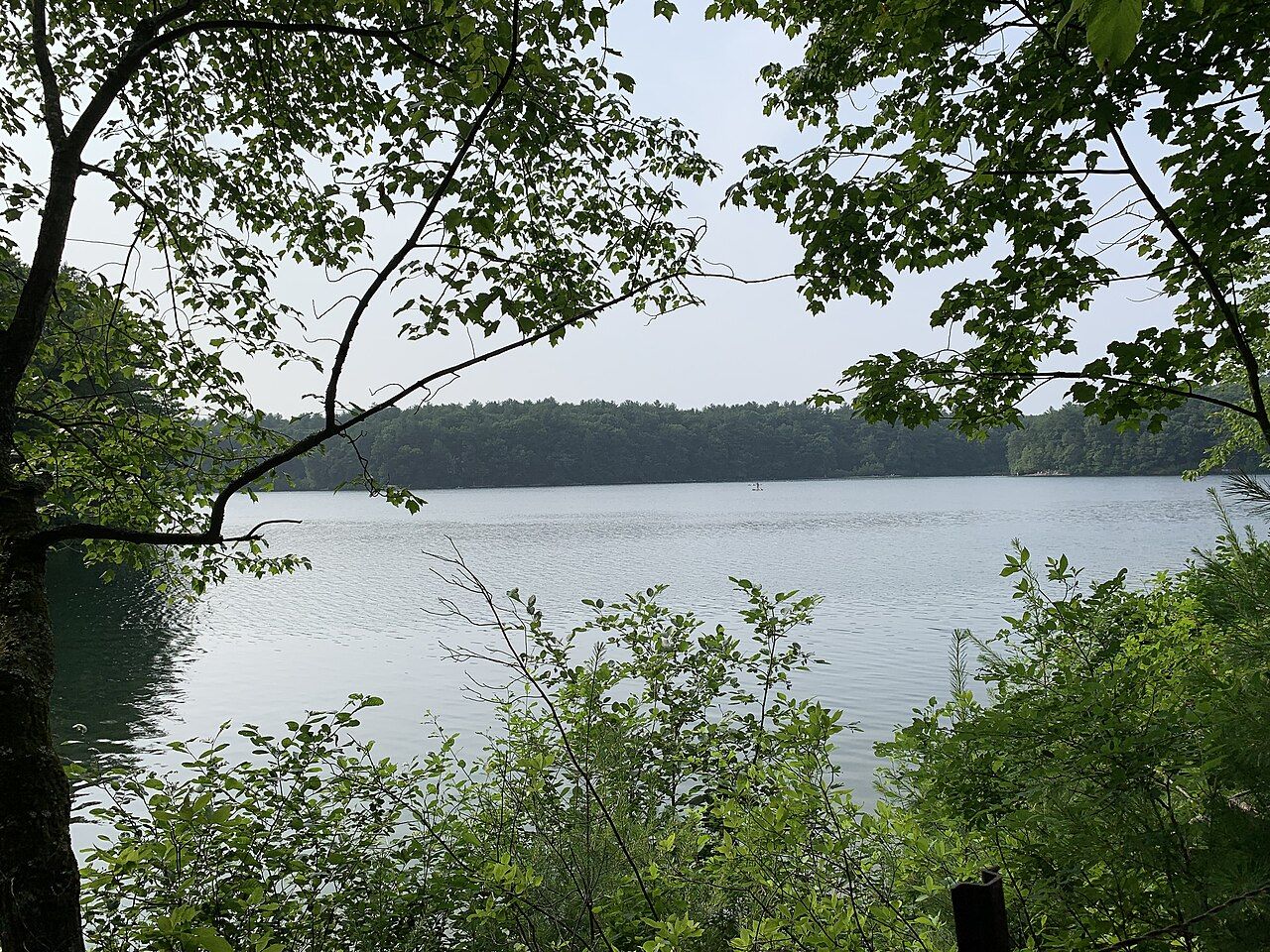
Few small towns hold as much American writing per square mile as Concord, Massachusetts. In the middle decades of the nineteenth century Ralph Waldo Emerson, Henry David Thoreau, Nathaniel Hawthorne, Bronson Alcott and his daughter Louisa May Alcott all lived here. They borrowed each other's books, walked the same roads and sat at the same dinner tables. The houses, the pond and the graves are close enough that you can see most of them in one long day, and see them properly in two.
The town lies about twenty miles northwest of Boston. You can drive out on Route 2 or take the commuter rail from North Station, which stops a short walk from the town centre. A car or a bicycle helps for Walden Pond, which sits a little under two miles south of Monument Square.
A town of neighbours
Emerson was the reason the others came. He settled in Concord in the 1830s, published his essay Nature in 1836 and drew younger writers into his circle. Thoreau was born in Concord in 1817 and spent nearly all his life here, surveying land, working in his family's pencil workshop and lodging for a time in Emerson's household. Bronson Alcott, the reforming teacher, moved his family to the town more than once. Hawthorne arrived as a newly married man in 1842.
What sets Concord apart from a single writer's house is the sense of a conversation. Thoreau built his cabin on a woodlot Emerson owned. Hawthorne later bought the house the Alcotts had lived in. The writers are buried a few steps from one another on the same ridge. If you have read any of them, Concord shows you how tightly their lives were tied, and how small the stage was on which so much of the period's thinking was done.
Walden Pond and the cabin site
Thoreau moved into the one-room cabin he had built near the shore of Walden Pond on 4 July 1845 and lived there for a little over two years, until September 1847. Walden, the book that came out of the experiment, was published in 1854. The pond is now Walden Pond State Reservation, run by the Commonwealth of Massachusetts, and on a summer afternoon it is a busy swimming beach as much as a literary site. That would probably not have surprised him: he swam in it most mornings.
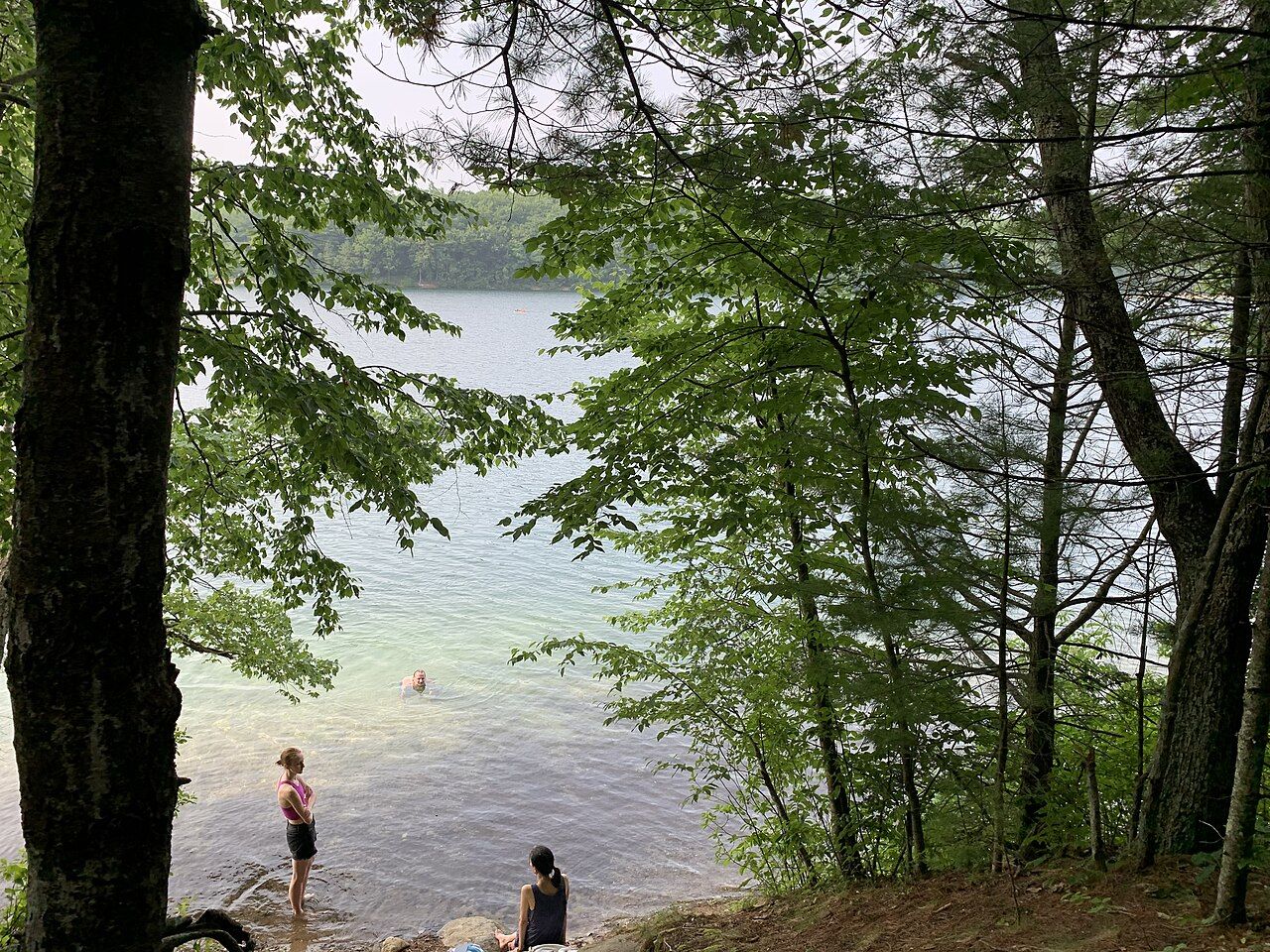
The cabin itself is long gone. Its site is a short walk along the shore path from the main beach, marked by granite posts that trace the outline of the walls. Beside it a cairn of stones has grown for generations, each one left by a visitor. Near the parking area you can step inside a replica cabin built to the dimensions Thoreau gave in the book, about ten feet by fifteen, with a bed, a desk and three chairs. The size alone tells you something about the book.
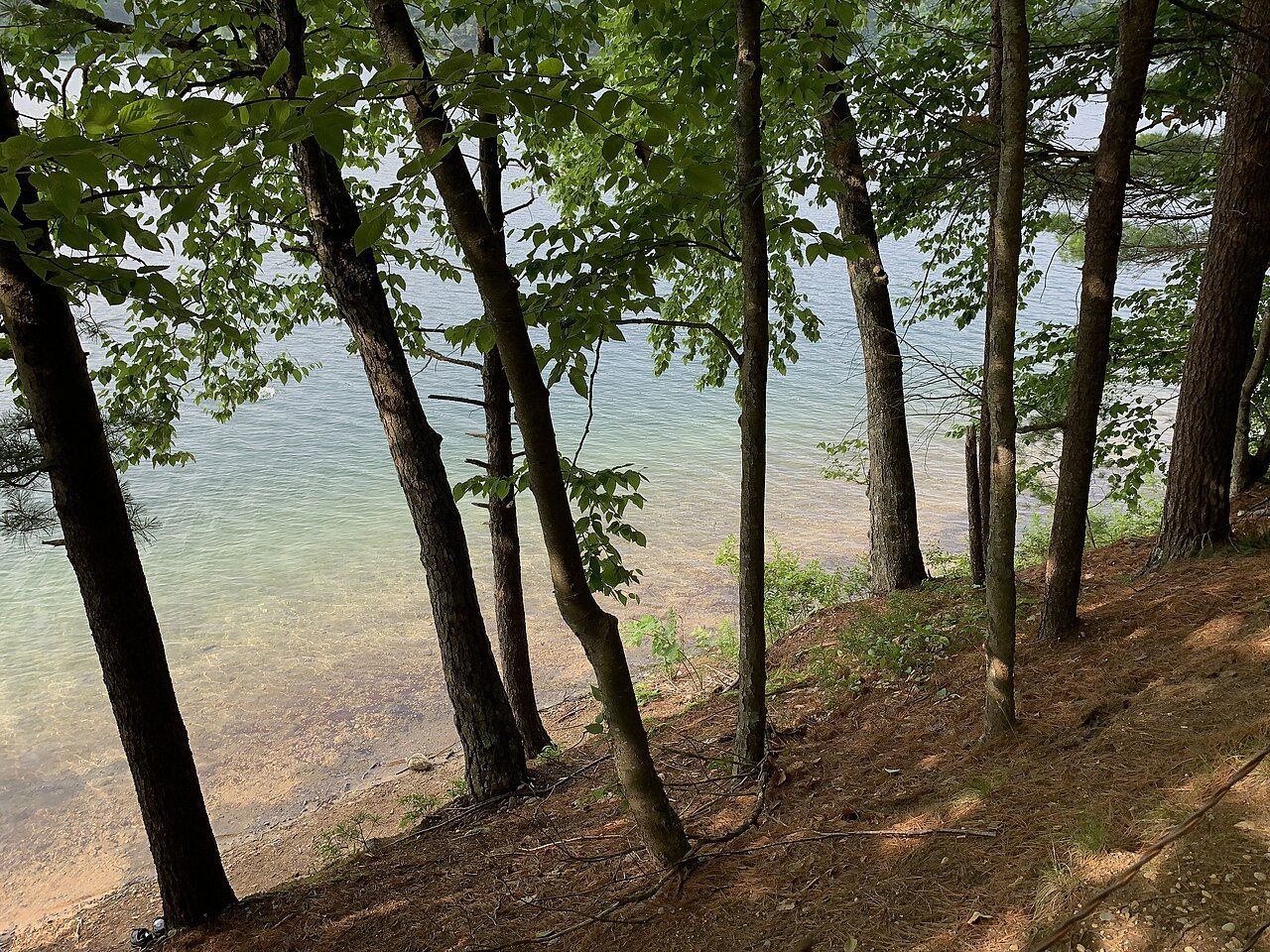
The path that circles the pond is under two miles and mostly shaded. The water is famously clear, because the pond is a deep kettle left by a melting glacier and fed by springs rather than streams. Thoreau surveyed it through the winter ice and found it just over a hundred feet deep, putting an end to the local belief that it had no bottom. Walk the far side in the early morning, before the beach fills, and the woods are quiet enough to read in.
Orchard House and the Wayside
On Lexington Road, east of the town centre, Orchard House was the Alcott family home from 1858 to 1877. Louisa May Alcott wrote Little Women here in 1868, at a small half-moon desk her father built between two windows of her room. Many of the furnishings belonged to the family, and her sister May's drawings still mark the walls and woodwork of her bedroom. The house is seen on guided tours in small groups, with times that vary through the year, so check before you go.
Shelved nearby · NE 028Literary New York on footA short walk farther along Lexington Road stands the Wayside. The Alcotts lived there in the 1840s and called it Hillside; Hawthorne bought it in 1852, renamed it and later added a tower study at the top of the house. It is part of Minute Man National Historical Park, and its opening is seasonal and limited. Emerson's own house, where he lived from 1835 until his death in 1882, is back toward town where Lexington Road meets the Cambridge Turnpike, and it too opens only in the warmer months. Across the road, the Concord Museum keeps furniture from Thoreau's cabin alongside the town's Revolutionary history.
The Old Manse and the North Bridge
The Old Manse stands beside the Concord River, next to the North Bridge where the fighting of 19 April 1775 began. Emerson's grandfather, the Reverend William Emerson, built the house in 1770, and his family watched the clash from its windows. Emerson himself stayed here in the 1830s while he was drafting Nature. In 1842 Hawthorne and his new wife Sophia rented the house and scratched short notes into the window glass with her diamond ring; you can still read them. Hawthorne's story collection Mosses from an Old Manse took its title from the house.
Thoreau planted a vegetable garden for the couple as a wedding gift, and a version of it is grown again beside the house each summer. From the garden it is a few steps to the bridge, a reconstruction, and to the Minute Man statue on the far bank. Emerson's poem written for the battle monument's dedication gave the phrase about the shot heard round the world, and its lines are cut into the base of the statue.
Authors' Ridge
Sleepy Hollow Cemetery is on Bedford Street, a few minutes' walk from Monument Square. Follow the signs uphill to Authors' Ridge. Thoreau's small family stone stands in a row of plain markers, his own reading simply Henry. Emerson lies under a large rough boulder of rose quartz with a bronze plaque. Hawthorne's grave is low and plain. Louisa May Alcott is buried with her family, and visitors leave pens and pencils at her stone.
The ridge is quiet even on busy days. It is a good place to end the visit, late in the afternoon, when the light comes low through the pines and you can take in the whole circle of neighbours at once.
Planning the day
Start at Walden early, before the parking fills, and walk the pond loop. Drive or cycle back into town for the Old Manse and the bridge, then take Lexington Road for Emerson's house, the Concord Museum, Orchard House and the Wayside. Finish at Sleepy Hollow. If you have two days, give one to the houses and one to the pond and the town's public library, whose special collections hold manuscripts and early editions of its famous residents.
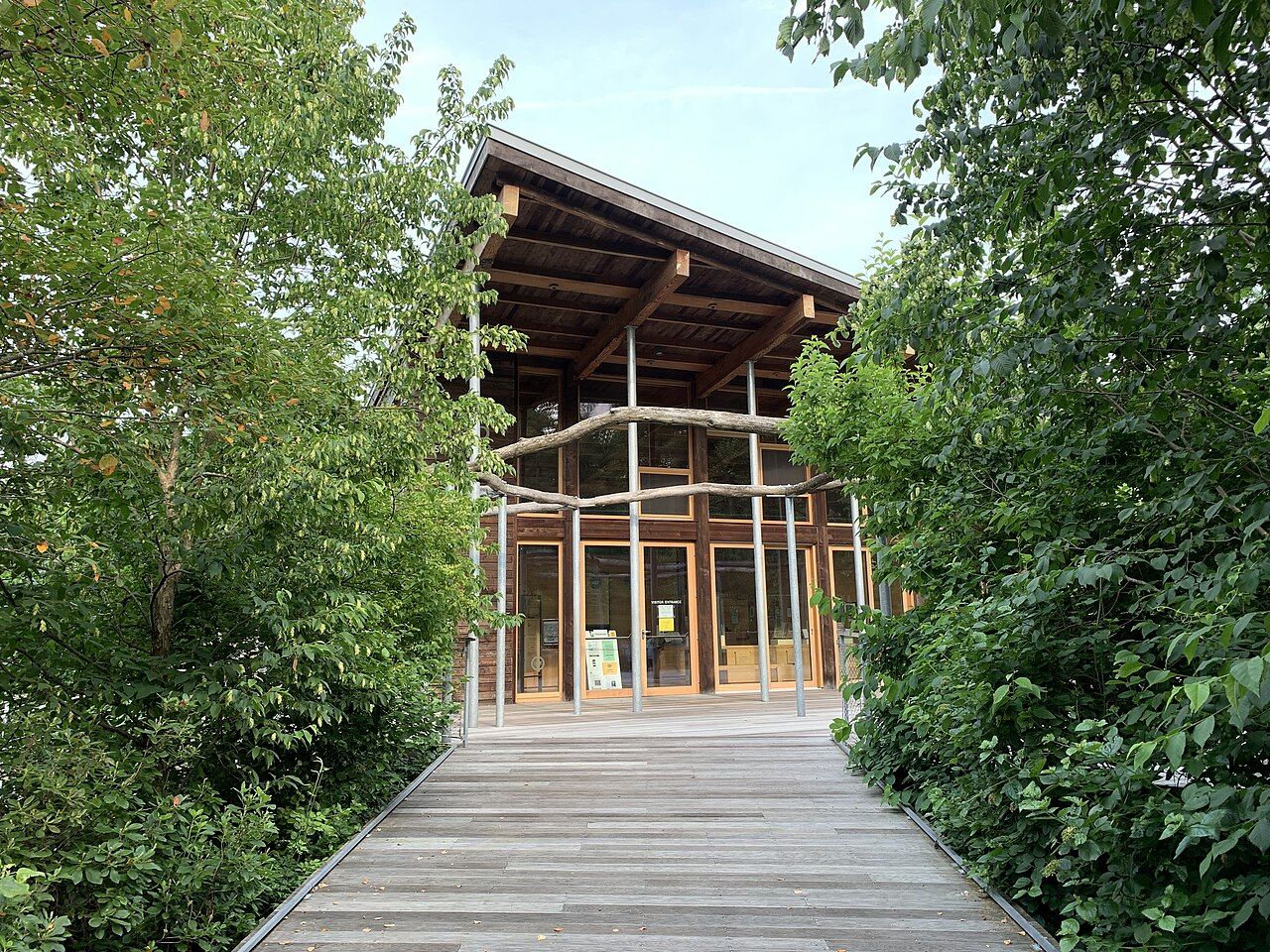
Concord fits easily into a longer loop through New England. Boston, with the reading rooms of the Boston Public Library, is half an hour away. Emily Dickinson's Amherst is an easy drive west, and Hartford lies south of it. For ideas on stringing them together, see our notes on how to plan a literary road trip.
The size alone tells you something about the book.
Pictures on loan from
- Erik Granlund CC BY-SA 4.0
- Erik Granlund CC BY-SA 4.0
- Erik Granlund CC BY-SA 4.0
- Erik Granlund CC BY-SA 4.0