
The South · Savannah
Savannah: Flannery O'Connor's squares
Flannery O'Connor was born on Lafayette Square and spent her first thirteen years there. Walk out from her childhood home through the city's squares, live oaks and harder history.
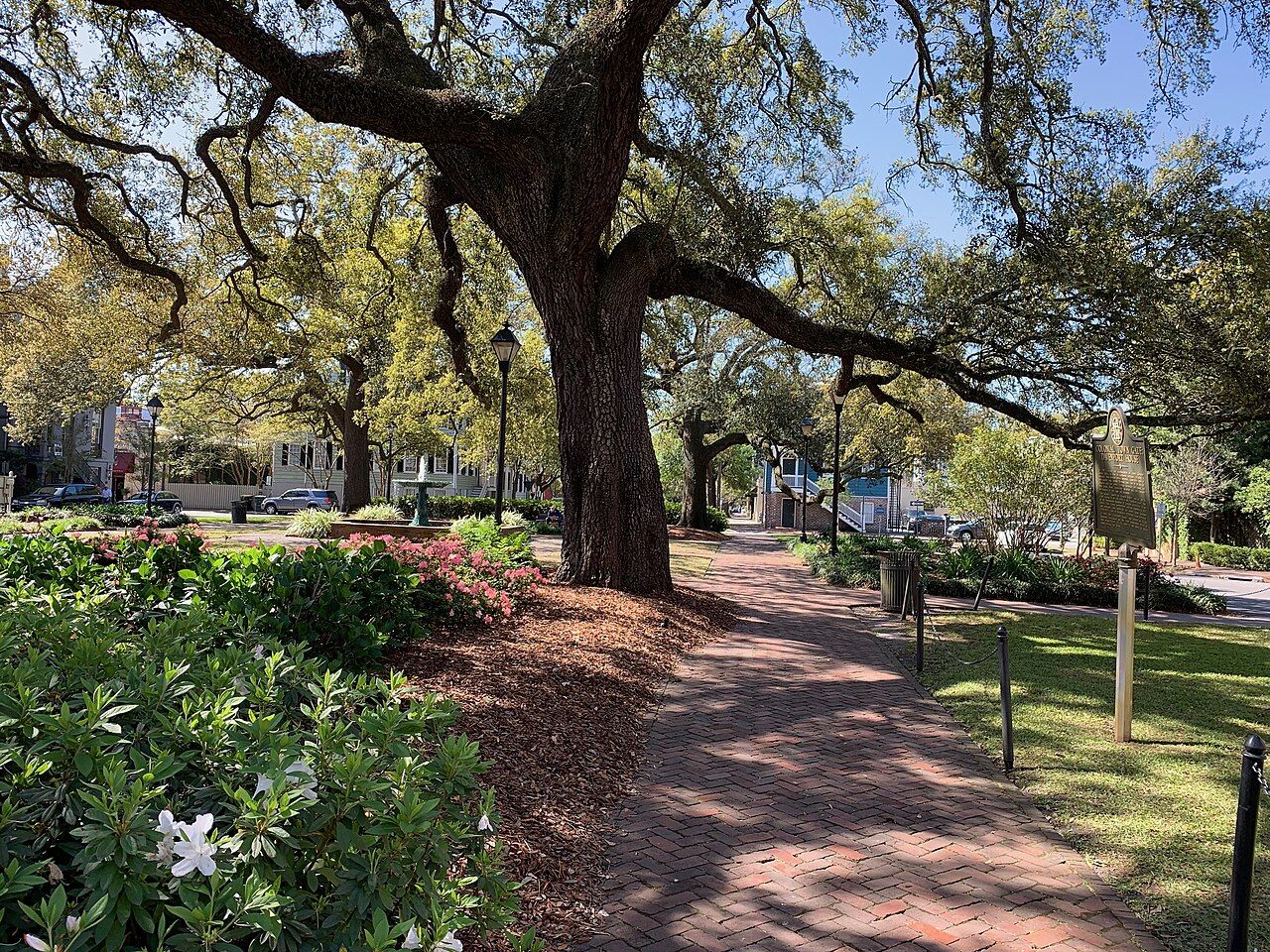
Savannah is a port city on the Georgia coast, laid out in 1733 around a grid of small public squares, each shaded by live oaks hung with Spanish moss. Flannery O'Connor was born here in 1925 and spent the first thirteen years of her life in a narrow house on one of those squares. She is better known for Milledgeville, the inland town where she wrote most of her work and raised peacocks, but Savannah is where she started, and her childhood home is the easiest place to meet her.
Lafayette Square
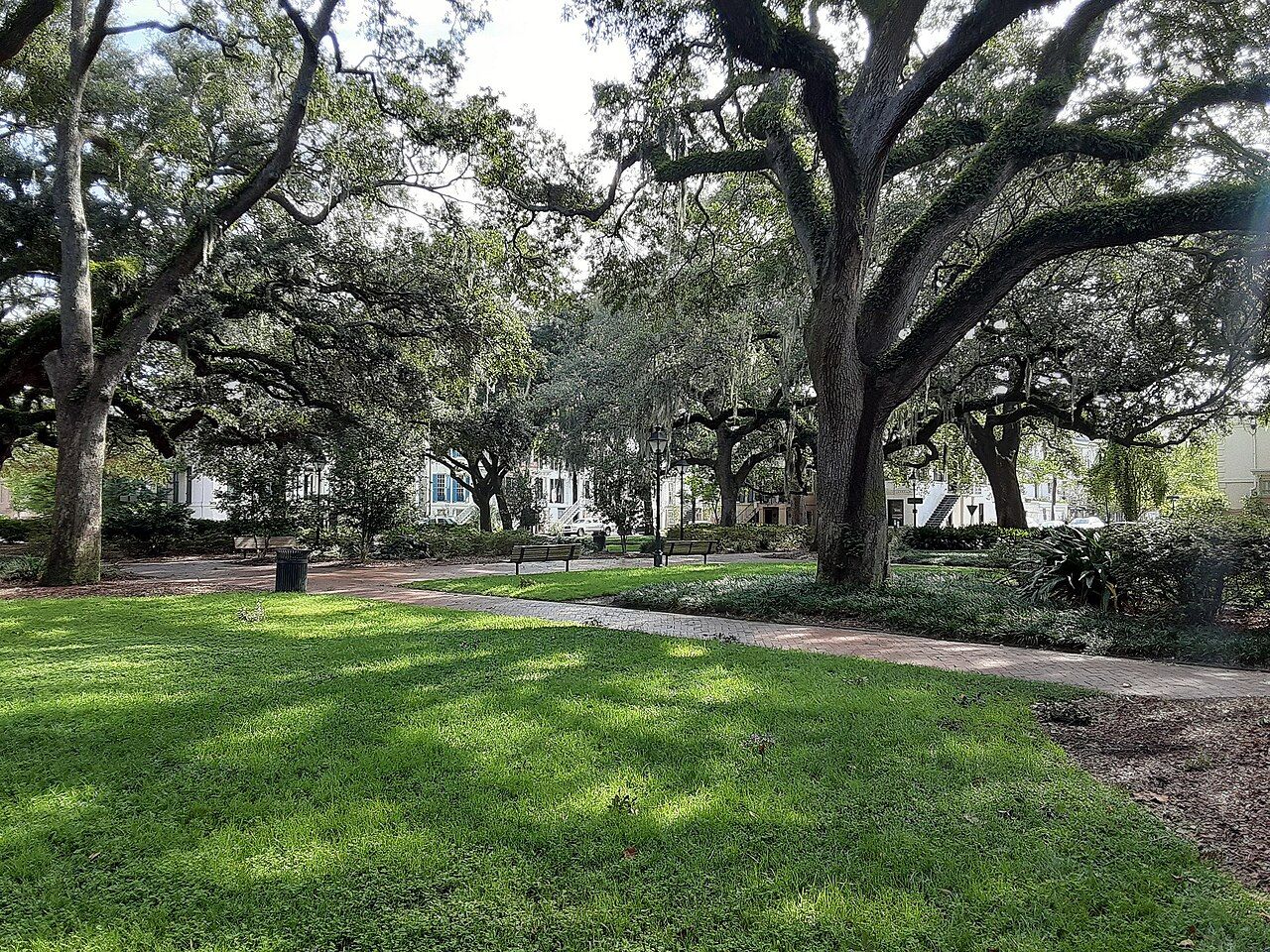
Lafayette Square, laid out in 1837 and named for the Marquis de Lafayette, who visited Savannah in 1825, is one of the quieter squares in the historic district, with a fountain at its centre and benches under the oaks. On its east side rise the twin spires of the Cathedral of St. John the Baptist. On its north side stands the Andrew Low House, a museum, where Juliette Gordon Low founded the Girl Scouts in 1912. O'Connor's childhood home faces the square from the southeast corner, on East Charlton Street.
The house on Charlton Street
Mary Flannery O'Connor was born on 25 March 1925, the only child of Edward and Regina O'Connor, and the family lived in this tall, narrow row house until 1938, when they moved away. A non-profit foundation now runs it as a museum. The parlour floor has been furnished as it would have been in her childhood, with family pieces and books, and you can see the small backyard where she played.
The best-known story from these years concerns a chicken. As a small child she trained a bantam hen to walk backward, and a newsreel company sent a cameraman to Savannah to film it in 1932. She later said it was the high point of her life and that everything since had been an anticlimax; she was joking, but she kept birds for the rest of her life.
Her father became ill with lupus, and the family moved first to Atlanta and then to Milledgeville. He died in 1941. O'Connor developed the same disease in her twenties, returned to Milledgeville to live with her mother at the family farm, and wrote there until her death in 1964, at thirty-nine. Her novels Wise Blood and The Violent Bear It Away and her two collections of stories, A Good Man Is Hard to Find and the posthumous Everything That Rises Must Converge, are violent, funny and deeply Catholic. Her collected stories won the National Book Award in 1972.
The cathedral across the square
The O'Connors were Catholic in a Protestant city, and their life centred on the cathedral across the square, where Flannery was baptised and went to Mass, and on the Catholic school beside it. The cathedral, rebuilt after a fire in 1898, is open to visitors outside service times, and its stained glass and painted ceiling are worth a quiet look. Her faith is the key to almost everything she wrote, and seeing how close she lived to it as a child helps explain why.
Shelved nearby · RD 133How to plan a literary road trip that worksWalking the squares
Savannah's founder, James Oglethorpe, planned the town in wards, each built around a square, with house lots on two sides and public buildings on the others. Most of the original squares survive, and walking from one to the next is the best way to see the city. Chatham Square on Barnard Street is broad and shady. Columbia Square has a fountain and the Davenport House, an early brick house saved in the 1950s by a group of residents whose campaign started the city's preservation movement.
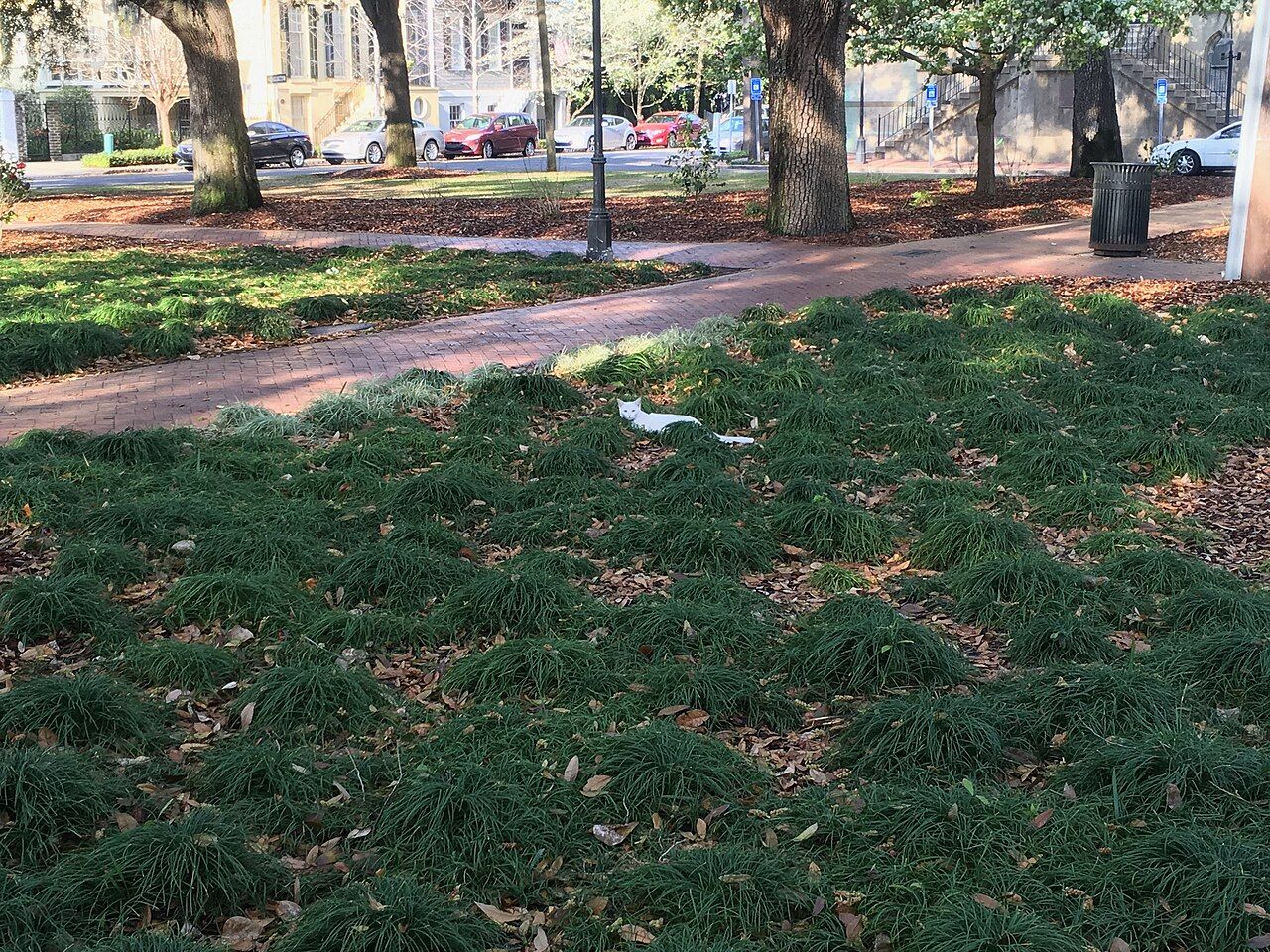
Taylor Square, on Abercorn Street, carried the name of John C. Calhoun, the pro-slavery South Carolina politician, until 2023, when the city renamed it for Susie King Taylor. Born enslaved in Georgia, she learned to read in secret in Savannah, served with a Black Union regiment as a nurse and teacher during the Civil War, and in 1902 published Reminiscences of My Life in Camp, the only memoir of the war written by a Black woman who served with the army. It makes a good second book for the trip.
Harder history and other writers
The beauty of the squares was paid for by slavery. Savannah's port shipped rice and cotton grown by enslaved people, and in March 1859, at a racecourse outside the city, more than four hundred enslaved men, women and children were sold over two days in one of the largest such sales in American history, an event remembered as the Weeping Time. Markers around the historic district and several house museums now tell this history alongside the architecture, and O'Connor's own stories return again and again to race in the South.
Other writers came from here too. The poet Conrad Aiken was born in Savannah in 1889 and is buried in Bonaventure Cemetery, east of the city, a beautiful place of oaks and river views that is worth an hour. To the west, Faulkner's Oxford is a long day's drive, Harper Lee's Monroeville is closer, and the road south leads in the end to Key West.
Pictures on loan from
- Seasider53 CC BY-SA 4.0
- JeffersonLH CC BY-SA 4.0
- Seasider53 CC BY-SA 4.0