
The road and the van · United States
Books on the road: a short history of the bookmobile
For more than a century American libraries have sent books out to readers who could not reach them, by wagon, by horse and mule, and by van. The story is a small history of the country itself.
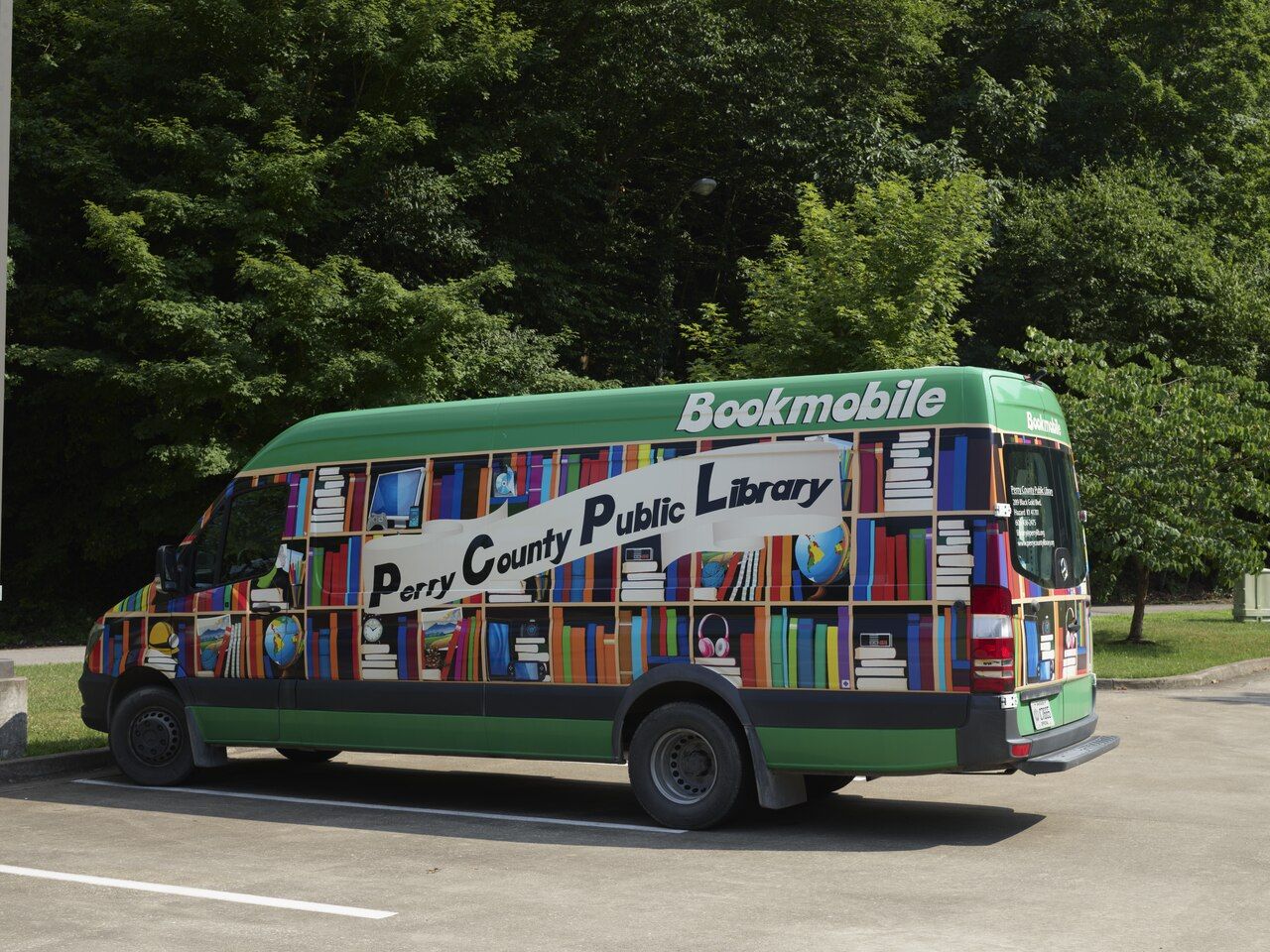
A bookmobile is a simple idea. If people cannot come to the library, the library goes to them. In the United States the idea took shape at the start of the twentieth century, when most Americans still lived in the country, roads were poor and many counties had no library at all. Since then it has moved by wagon, by pack horse, by truck and by bus, and it is still on the road in many places today.
The history is told here in broad strokes, from the public record. If it makes you curious, the best next step is to find a working bookmobile on your own route and see one at a stop.
The book wagon in Washington County, Maryland
The story usually starts in Hagerstown, Maryland. Mary Lemist Titcomb, the first librarian of the Washington County Free Library, wanted to serve the farm families scattered across the county. She had already sent boxes of books to post offices and general stores. In 1905 she went further, and the library began sending out a horse-drawn wagon fitted with shelves, driven by a member of the library staff.
The book wagon followed set routes through the countryside, stopping at farmhouses and crossroads. Families chose their books from the shelves on its sides, and the driver collected the ones they had finished. The wagon reached families who would rarely have come into town for a book, and it is generally counted as the first bookmobile in the country.
The original wagon did not last; it was wrecked in an accident a few years later, and the library replaced it with a motor van. Hagerstown remembers the story, and the idea quickly spread to other counties and states.
By the 1910s and 1920s other libraries were experimenting with book trucks and motor vans of their own, often converted delivery vehicles fitted with shelves. Better roads and cheaper cars made the idea practical, and county library systems in several states began to plan their rural service around regular routes rather than occasional deliveries.
The pack-horse librarians of Kentucky
In the 1930s, during the Great Depression, the federal Works Progress Administration funded the Pack Horse Library Project in eastern Kentucky. The region's mountain hollows had few roads, high illiteracy and almost no libraries. From 1935 to 1943 local carriers, most of them women, rode horses and mules along creek beds and mountain trails to bring books and magazines to isolated homes and one-room schools.
The work was hard and the pay was low. Carriers often covered long routes in all weathers, sometimes on foot where the trail was too steep to ride. The books themselves were donated and often worn; librarians repaired them, and they pasted recipes, quilt patterns and clippings into homemade scrapbooks that were passed from family to family.
Each county project usually worked from a central base, often in a school, a church or a borrowed room, where the books were sorted, mended and sent out along the routes. Local communities were expected to help find the space and the books, while the federal programme paid the carriers. Photographs from the period show women on horseback with saddlebags full of books, fording creeks or climbing rocky trails toward cabins on the hillsides.
The project was a relief programme as much as a library service, and it gave work to people who badly needed it. It ended during the Second World War, but it left a lasting memory in the region, and the story has since been told in exhibitions and novels.
The project was a relief programme as much as a library service, and it gave work to people who badly needed it.
Shelved nearby · RD 133How to plan a literary road trip that worksMid-century: the bookmobile goes motorised
After the Second World War, the motorised bookmobile became a familiar sight across rural America. Libraries bought trucks and buses, fitted them with shelves and sometimes a small desk, and sent them out on regular schedules. The Library Services Act of 1956 put federal money into library service for rural areas, and much of it went into bookmobiles.
The bookmobile was part of daily life in many small towns and farm districts. Children waited at the stop for its weekly or fortnightly visit, and for families with no library nearby it was the only way to borrow books. The history was not even, though. In the South, library services were segregated by law until the civil rights era, and Black communities were often served poorly or not at all, by bookmobile or otherwise. That should be remembered alongside the happier stories.
Inside, a mid-century bookmobile was a careful piece of design. Shelves ran along both walls and were often tilted back slightly so the books stayed in place on bends and hills. There might be a small desk for the librarian and a rack of magazines. In summer the vans were hot; in winter they were cold; and the librarians who drove them often learned to handle breakdowns on lonely roads.
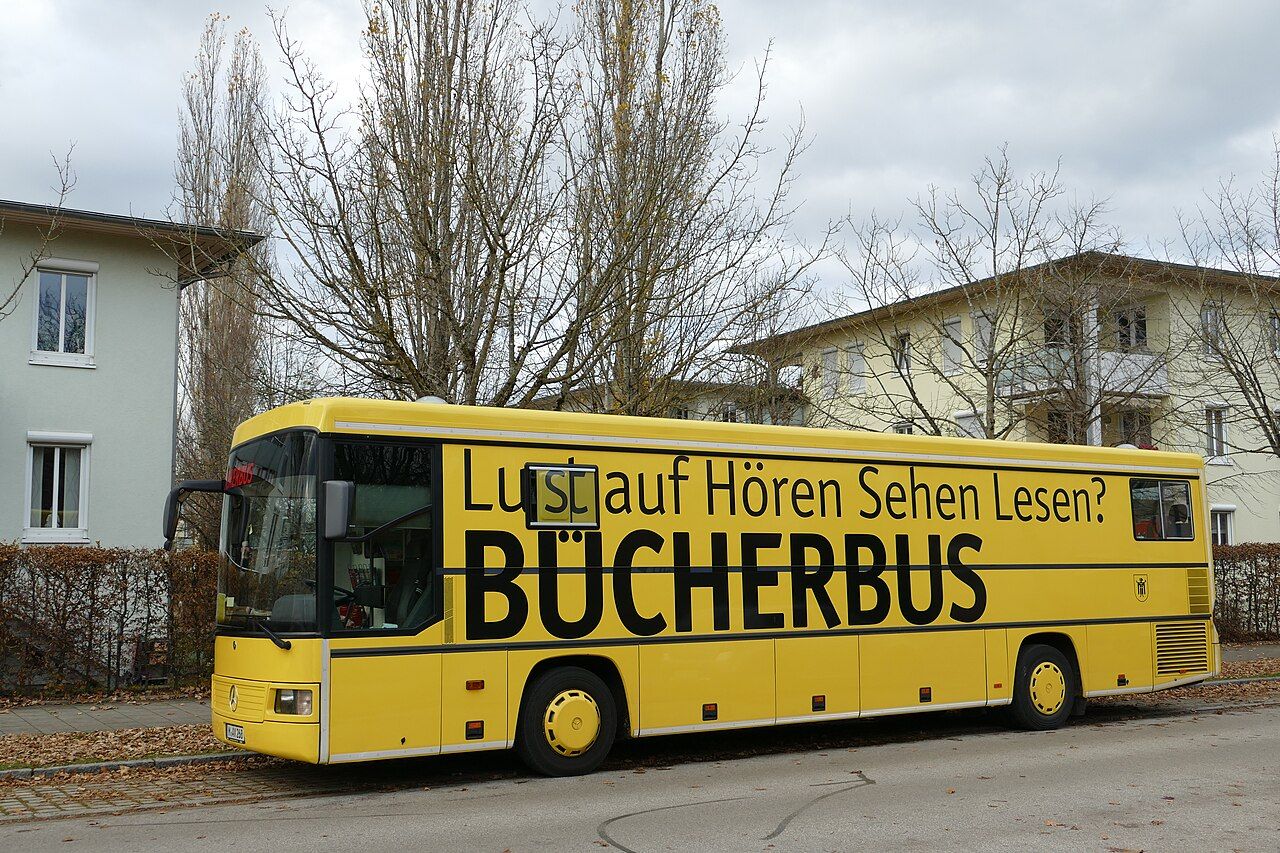
The idea also spread abroad. Cities and rural regions in Europe and elsewhere run their own book buses, many of them large and brightly painted, serving suburbs and villages.
Bookmobiles today
Many American public libraries still run bookmobiles, though their shape has changed. Some are full-size buses; others are smaller vans that are easier to drive and park. Many now carry laptops and wireless internet as well as books, and they visit schools, senior housing, rural crossroads and neighbourhoods far from a branch library.
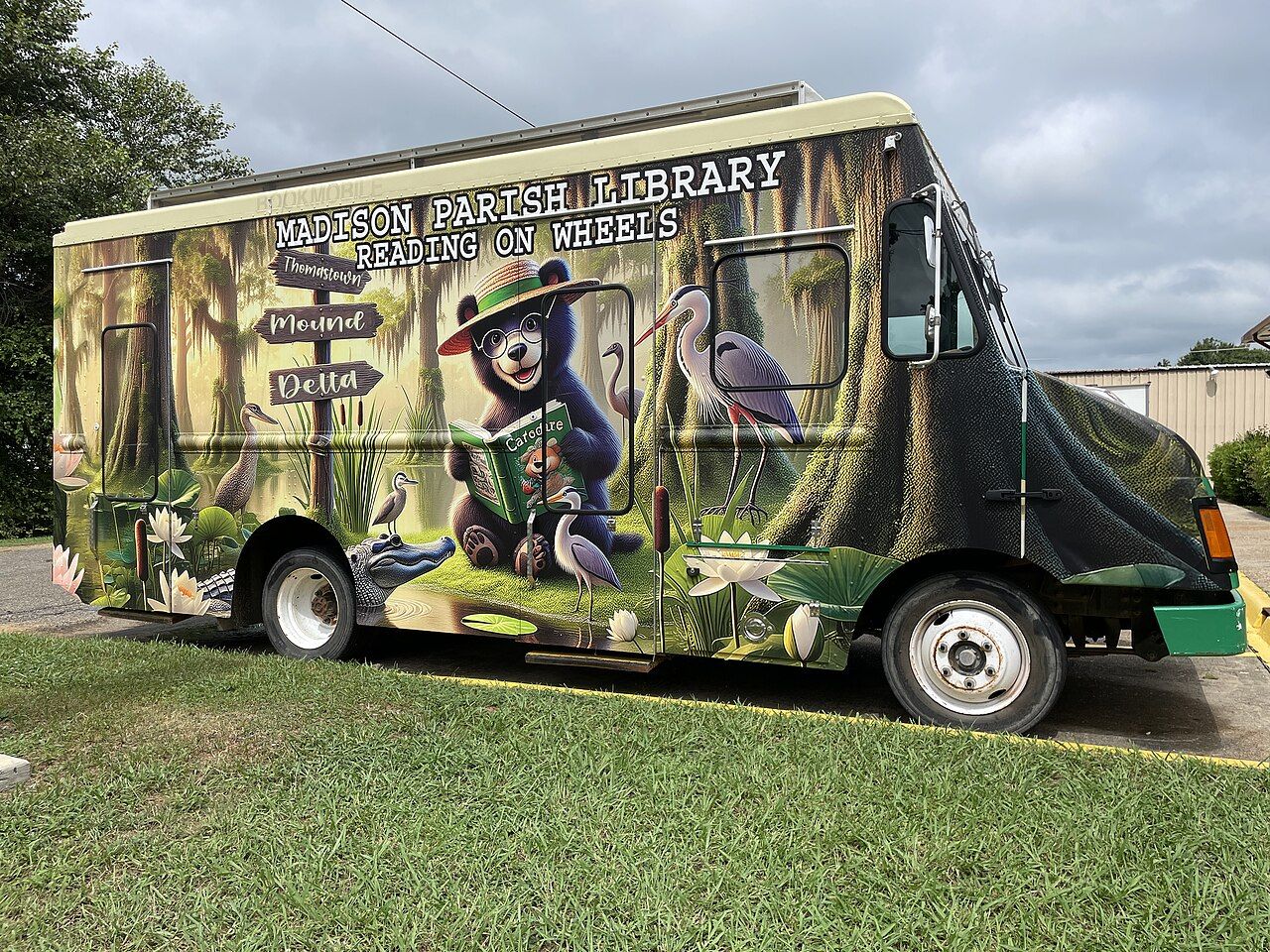
Their sides have become a kind of folk art. Libraries commission paintings of local wildlife, landscapes and characters reading, and a bookmobile can be the most cheerful vehicle in a parish or county. In eastern Kentucky, where the pack-horse librarians once rode, libraries such as the one in Perry County still send vans into the hills.
American libraries mark a bookmobile day each spring during National Library Week, usually in April, and some states hold gatherings where you can see several vehicles together.
Seeing one on your trip
If you are planning a literary road trip, a bookmobile stop is an easy addition. Look up the county library in the area you will pass through; many post their routes and stop times. Arrive a little early, say hello, and let the staff go about their work.
- Bookmobile schedules change with school terms and the seasons, so check before you go.
- Rural libraries in Appalachia and the South run some of the oldest routes.
- Christopher Morley's novel Parnassus on Wheels (1917), about a travelling bookseller's horse-drawn caravan, is good light reading on the road.
The big libraries are worth the visit too. The Library of Congress in Washington and the Boston Public Library show where the books come from; the bookmobile shows where they go.
Pictures on loan from
- Carol M. Highsmith CC0
- Kritzolina CC BY-SA 4.0
- Ktkvtsh CC BY 4.0